What if clear details are the first step towards a smoother recovery? When your vehicle breaks down or is damaged, uncertainty about safety, your location and what happens next can make a difficult situation feel harder. Emergency vehicle recovery starts with understanding what has happened and where the vehicle is.
It’s understandable to worry about delays, the right recovery vehicle and where your car will be taken. A calm, accurate description helps the recovery team plan the collection. Little Car Recovery brings more than ten years of vehicle recovery experience to breakdowns, accidents and other roadside problems.
This guide explains what to do first, what information to share when arranging help and how collection and handover can work. You’ll also learn the difference between roadside assistance and recovery, so you can understand the next step and share your preferred destination. With a clear plan, you can focus on staying safe while help is arranged.
Key Takeaways
- Learn when roadside assistance may be enough and when emergency vehicle recovery is the more suitable next step.
- Match the help you request to the situation, whether it’s a breakdown, accident or planned vehicle transport.
- Prepare key details such as your location, registration and the vehicle’s condition to help organise collection.
- Know the practical steps to take while waiting, with personal safety as the priority.
- Little Car Recovery provides 24/7 roadside assistance and recovery across the UK, backed by more than ten years of experience.
Emergency vehicle recovery: what it covers and when to call
Emergency vehicle recovery helps when a car can’t safely or reliably continue its journey. Depending on the situation, the team may be able to help at the roadside or collect the vehicle and take it to an agreed destination. Vehicle recovery covers different ways of moving disabled vehicles. The right response depends on the vehicle’s condition and where it has stopped.
Roadside assistance and recovery are related, but they aren’t the same. Roadside assistance may resolve a problem where the vehicle is, such as a flat battery, flat tyre or lack of fuel. If the vehicle still can’t continue, recovery provides collection and onward transport. Collision damage or a breakdown that leaves the car unable to move safely may also call for recovery rather than a roadside fix.
When does a vehicle need recovery rather than roadside assistance?
If the car can’t be driven safely, won’t start, or can’t roll or steer as needed, it may need to be collected and transported. A minor issue might be resolved at the roadside, but don’t try to diagnose the fault yourself or drive on if the vehicle feels unsafe. Instead, describe what happened and what the car can or can’t do. That helps the team plan suitable assistance.
For example, explain whether the engine starts, whether a tyre is damaged, and whether collision damage affects the vehicle. If you’re unsure, say so. Clear symptoms are more useful than guessing at a mechanical cause.
What should you do before arranging emergency help?
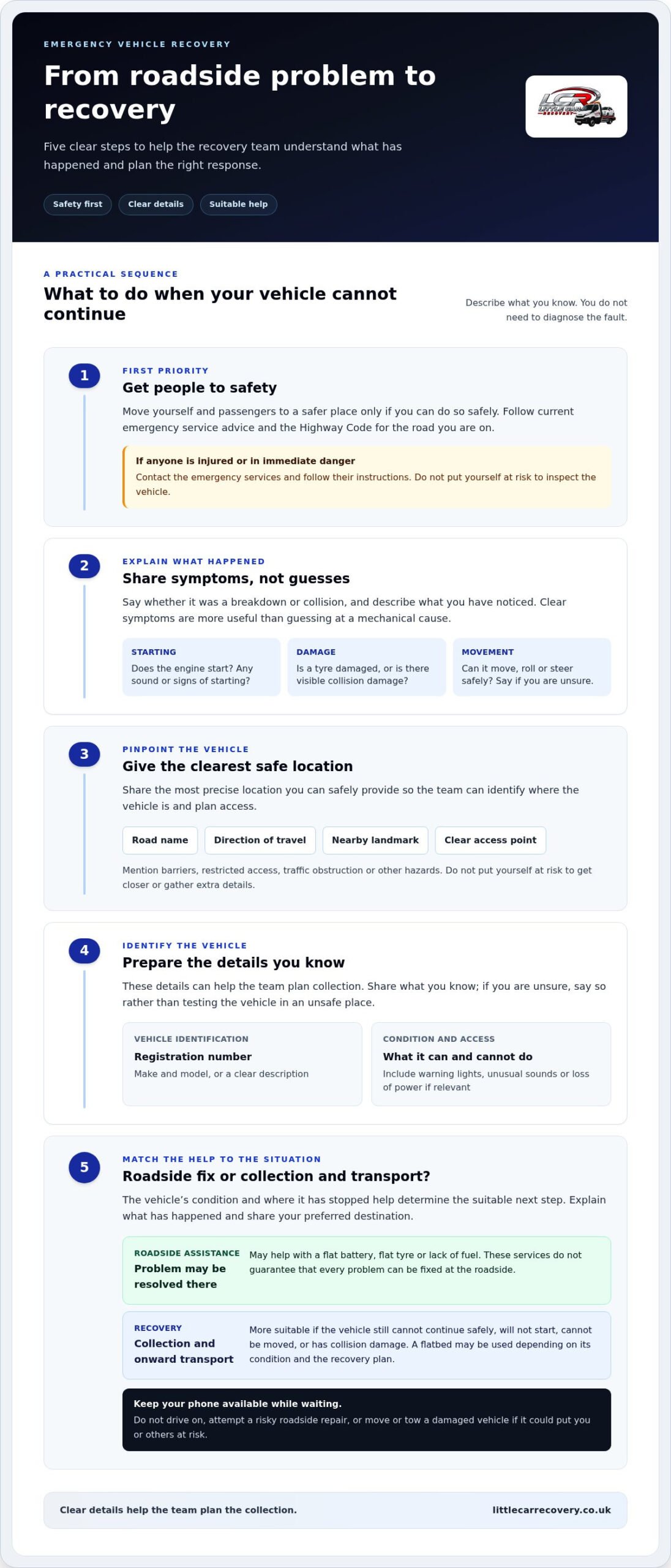
Put your safety first. Move yourself and passengers to a safer place only if you can do so safely, and follow current emergency service advice and the Highway Code for the road you’re on. If anyone is injured or in immediate danger, contact the emergency services and follow their instructions.
Once you’re safe, note your location and keep your phone available. You can find more practical steps in the dedicated breakdown safety checklist later in this guide. When arranging emergency vehicle recovery, give a straightforward account of the vehicle’s condition and explain whether it’s obstructing traffic or in another hazardous position. Don’t put yourself at risk to inspect the vehicle or gather details.
Which emergency vehicle recovery help fits your situation?
The right next step depends on what’s happened and whether the vehicle can be moved safely. Describe the symptoms rather than trying to name the fault. This helps the recovery team understand whether roadside assistance may help or whether collection and transport are more suitable.
Breakdown, collision or immobilised vehicle: what changes?
For a breakdown, note any warning lights, unusual sounds or loss of power. Say whether the car starts and can move safely. Don’t keep driving if the vehicle feels unsafe. If it won’t start or can’t be moved, explain that when arranging emergency vehicle recovery. Avoid attempting a repair at the roadside if it could put you or others at risk.
After a collision, focus first on people’s safety. Follow current emergency service guidance, then describe any visible damage and whether the vehicle is blocking the road or unable to roll. For a motorway incident, use the dedicated motorway breakdown guide for situation specific advice. A flatbed may be used to collect a vehicle for transport, depending on its condition and the recovery plan.
Recovery and towing can involve hazards. Don’t try to move or tow a damaged vehicle yourself if it could put you or others at risk. Follow current UK Highway Code guidance and any instructions from the emergency services or relevant road authorities.
When might roadside assistance resolve the problem?
Some faults may be addressed where the vehicle has stopped. Little Car Recovery provides roadside help, including battery jump starts, tyre changes and fuel delivery. These services don’t guarantee that every problem can be fixed at the roadside. If the vehicle still can’t continue safely, recovery and onward transport may be needed instead.
- Flat battery: Explain whether the car makes any sound or shows signs of starting.
- Flat tyre: Say which tyre is affected and whether the vehicle is in a safe place to access.
- Out of fuel: Give your location and the type of fuel needed, if you know it.
Urgent recovery is for a vehicle that has broken down or been damaged and can’t safely continue. Scheduled transport is different: it’s arranged in advance to move a vehicle between agreed locations, rather than responding to an immediate roadside problem. For help with an urgent breakdown or accident, arrange emergency vehicle recovery support and explain what has happened, where the vehicle is and its condition.
What information helps organise emergency vehicle recovery?
Clear details help the team plan the collection, understand what the vehicle can safely do and discuss where it needs to go. You don’t need to identify the fault. Describe what you’ve noticed and share what you know. If you’re unsure whether the vehicle starts, rolls or steers, say so rather than testing it in an unsafe place.
What details should you share when you call?
Give the most precise location you can safely provide. A road name, direction of travel, nearby landmark or clear access point can help distinguish your vehicle from others nearby. Mention barriers, restricted access or hazards that could affect reaching it. Never put yourself at risk to get closer or collect extra details.
Have these details ready if you can:
- Vehicle identification: Registration number, make and model, or a clear description if you don’t know the make.
- What happened: Explain whether it broke down, was involved in a collision, has a flat tyre, won’t start or has run out of fuel.
- Current condition: Say whether it starts, rolls or steers, and describe visible damage or anything that could make loading difficult.
- Exact position and access: Give the collection point and flag nearby traffic, narrow access or other hazards.
- Your contact details: Provide a number where the team can reach you and keep your phone available for updates.
These details help the team understand the situation and plan a suitable collection. For example, a car that can’t roll or steer may need a different loading plan from one that can be moved. Be especially clear if the vehicle is obstructing traffic or stopped somewhere hazardous, but stay in a safe place while you make contact.
How do collection and handover arrangements work?
Once the team understands the incident and vehicle condition, discuss the recovery plan and intended destination. Be clear whether you want the vehicle taken to a home address, garage or another agreed location. If someone else will receive it, share their name and contact details where practical, so the handover can be planned.
Agree how to pass over the keys and share any useful information about the vehicle before collection. If you can’t be present, explain who can meet the recovery team and what they need to know. Arrangements depend on the incident, vehicle and destination, so share any changes promptly. You don’t need to guess at a fault or assume a particular collection time. Accurate information helps the team organise emergency vehicle recovery without avoidable confusion.
What to Do While Waiting for Emergency Recovery
Once you’ve arranged help, keep your attention on people’s safety. If anyone is injured or there’s immediate danger, call 999 and follow the emergency services’ instructions. Don’t stand in traffic, inspect damage from an unsafe position or attempt a repair where passing vehicles or other hazards put you at risk.
How can you stay safe before help arrives?
Road conditions and safe actions vary by location, so follow current official UK guidance for the road you’re on. If you’re on a motorway, use the dedicated motorway safety guide for specific advice. For other roadside incidents, see the car breakdown safety checklist. These guides cover more detail than is practical to follow during a stressful moment.
Until help arrives, take these simple steps:
- Stay in a safer place. Move away from traffic only if you can do so safely. Don’t cross live lanes or return to the vehicle if doing so could expose you to danger.
- Keep your phone available. Make sure the recovery team can reach you, and answer if they need to clarify your position or the vehicle’s condition.
- Keep key details to hand. Be ready to repeat the registration, location and destination, and explain any change in the vehicle’s condition.
If the situation changes, such as the vehicle shifting position or a new hazard appearing, tell the emergency services if there’s danger and update the recovery team when it’s safe to do so. Don’t rely on an estimated arrival time as a reason to leave a hazardous position. Follow official instructions and remain where you’re safest.
How can you prepare for the recovery vehicle?
Stay contactable and listen for calls or messages. If your location is difficult to identify, be ready to explain a nearby landmark or access point without moving into danger. Have the agreed destination and vehicle registration ready too, so the collection plan stays clear.
Wait for the recovery team’s directions before approaching or preparing the vehicle. Follow their guidance for passing over the keys and completing the handover. If you can’t be there, let the team know who will meet them, if someone is available, and share any practical handover details. Never attempt to position or move the vehicle yourself unless it’s safe and you’ve been advised to do so.
For calm, practical help with arranging emergency vehicle recovery, share your location and vehicle details and follow the team’s instructions.
Arrange 24/7 emergency vehicle recovery with Little Car Recovery
A vehicle emergency can leave you unsure what to do next. Little Car Recovery is an independent operator with more than ten years of experience, providing roadside assistance and vehicle recovery across the UK, 24/7. Contact the team by phone or WhatsApp and explain what’s happened. A calm, clear conversation helps establish the next steps.
What happens when you contact Little Car Recovery?
Share your location, vehicle registration and type, what went wrong, and whether the vehicle starts, rolls or steers. Mention visible damage, access difficulties or hazards near the collection point. If you don’t know the cause, describe the symptoms instead. You can also explain where you’d like the vehicle taken.
The team will discuss the situation with you and arrange suitable roadside assistance or recovery. Depending on the problem, roadside help may be appropriate, or the vehicle may need collection and onward transport. Clear details help the team understand the vehicle’s condition and plan how to reach it. They also help you agree what happens next without having to guess at the fault or recovery method.
You don’t need to have every detail ready before you make contact. Share what you know, say when you’re unsure, and keep your phone available in case the team needs to clarify your location or the vehicle’s condition. The team can talk through the arrangement with you, including the destination and collection details.
How can you make the recovery handover straightforward?
Before the vehicle is moved, make sure you and the team have the same collection point and destination in mind. If another person will receive the vehicle, tell the team who they are and how they can be contacted, where practical. Agree how to pass over the keys and share any useful handover information. If plans change, let the team know as soon as you safely can.
Little Car Recovery supports drivers with emergency vehicle recovery and roadside assistance at any time of day. Contact the team by phone or WhatsApp, explain the situation and discuss the right next step. For help now, Contact Little Car Recovery for emergency help.
Know your next step and arrange help with confidence
When your vehicle can’t continue safely, focus first on your safety and contact the appropriate help. Describe what’s happened, where the vehicle is and whether it starts, rolls or steers. Those clear details help the recovery team plan collection and agree an onward destination with you.
Roadside assistance may address some problems where the vehicle has stopped. If it can’t be moved safely, emergency vehicle recovery may be the right option. Keep your phone available, follow official safety guidance and share any changes in the situation.
Little Car Recovery is an independent operator with more than ten years of vehicle recovery experience. The team supports customers nationally across the UK, 24/7, and you can get in touch by phone or WhatsApp. For practical help, contact Little Car Recovery for emergency help.
A clear conversation can make the next steps easier to manage. Stay safe and let the recovery arrangements take shape one step at a time.
Frequently Asked Questions
What is emergency vehicle recovery?
Emergency vehicle recovery is help to collect and transport a vehicle that can’t safely or reliably continue its journey. It may be needed after a breakdown, collision or other problem that leaves the vehicle unable to move. Depending on the situation, roadside assistance may be suitable instead. Share what has happened, where the vehicle is and whether it starts, rolls or steers, so the team can discuss the appropriate next step.
Is emergency vehicle recovery available 24 hours a day?
Yes. Little Car Recovery operates 24/7 and serves customers nationally across the UK. Contact the team by phone or WhatsApp to explain the incident and provide your location and vehicle details. The team will discuss the recovery or roadside assistance arrangement with you. Response times depend on the circumstances, so a specific arrival time can’t be assumed.
What information do I need to give when requesting emergency car recovery?
Share your precise location, vehicle registration, make or type, and a clear description of the problem. Explain whether the vehicle starts, rolls or steers, if you know, and mention any visible damage, access issues or nearby hazards. Tell the team where you’d like the vehicle taken and provide a contact number. If you’re unsure about a detail, say so rather than guessing or inspecting the vehicle somewhere unsafe.
Can a recovery service help if my car has been in an accident?
Yes. Little Car Recovery provides accident vehicle recovery. Put personal safety first and follow emergency service instructions if anyone is injured or in immediate danger. Once it’s safe to arrange help, describe the vehicle’s position and any visible damage, including whether it can roll or steer. Don’t try to move a damaged vehicle yourself if doing so could put you or others at risk.
What happens if my car will not start or cannot be driven?
Tell the recovery team that the vehicle won’t start or can’t be driven, and explain any symptoms you’ve noticed. Don’t attempt an unsafe roadside repair or keep trying to drive a vehicle that feels unsafe. The team can discuss whether roadside assistance, such as a battery jump start, may help or whether the vehicle needs collection and onward transport. Share your location and intended destination to help plan the arrangement.
How much does emergency vehicle recovery cost?
The cost depends on the circumstances and the arrangement needed. Factors can include the distance to the destination, the vehicle’s condition and the collection logistics. There isn’t one price that applies to every recovery, and this guide doesn’t quote a fee. When arranging assistance, describe the incident and intended destination so the team can discuss the recovery plan and relevant charge with you.
Can I arrange emergency recovery by WhatsApp?
Yes. You can contact Little Car Recovery by WhatsApp to arrange emergency recovery. Include your location, vehicle registration and type, what has happened, whether the vehicle starts or can move, and where you’d like it taken. Add a contact number and mention damage, access problems or nearby hazards. Keep your phone available in case the team needs to clarify details or discuss the collection and handover plan.