What if the safest choice after a breakdown isn’t always to stay in the car? The right move depends on where you’ve stopped, the traffic around you and whether you can reach a safer place without crossing danger. It’s understandable to feel unsure, especially on a busy road or in poor visibility. A clear car breakdown safety checklist can help you focus on people first, then the vehicle and the call for help.
This guide walks you through the first steps to take at the roadside, including how to decide whether to stay inside or get out, make yourself visible and respond if your stopping place feels unsafe. You’ll also find practical items to keep in your car, without turning the boot into a workshop.
Having a few details ready can make it easier to explain what’s happened and where you are when you contact a recovery provider. We’ll cover what to tell them and when professional recovery may be the safer option. Take it one step at a time: protect yourself, prepare sensibly and arrange help calmly.
Key Takeaways
- Use a simple car breakdown safety checklist to guide your first actions before trying to diagnose the fault.
- Decide whether to leave the vehicle by considering the road, its position and whether you can reach a safe refuge without added risk.
- Match your next step to the situation: a vehicle that can move safely, a hazardous stop and an unclear fault each call for a different response.
- Build a practical kit around essentials such as a charged phone, power bank, torch and first-aid supplies. Add seasonal items if useful.
- Before contacting a recovery provider, note your precise location, vehicle make and model, registration and any visible symptoms.
Car breakdown safety checklist: what to do first
A breakdown can be unsettling, but you don’t need to diagnose the fault straight away. Focus on controlling the car and protecting everyone in it. A breakdown can result from a mechanical or electrical failure, but the cause can wait until you’re somewhere safe.
First priority: protect people from passing traffic. The safest response depends on the road, where the car has stopped and whether you and your passengers can move safely. Don’t automatically get out or stay inside without considering the immediate risks.
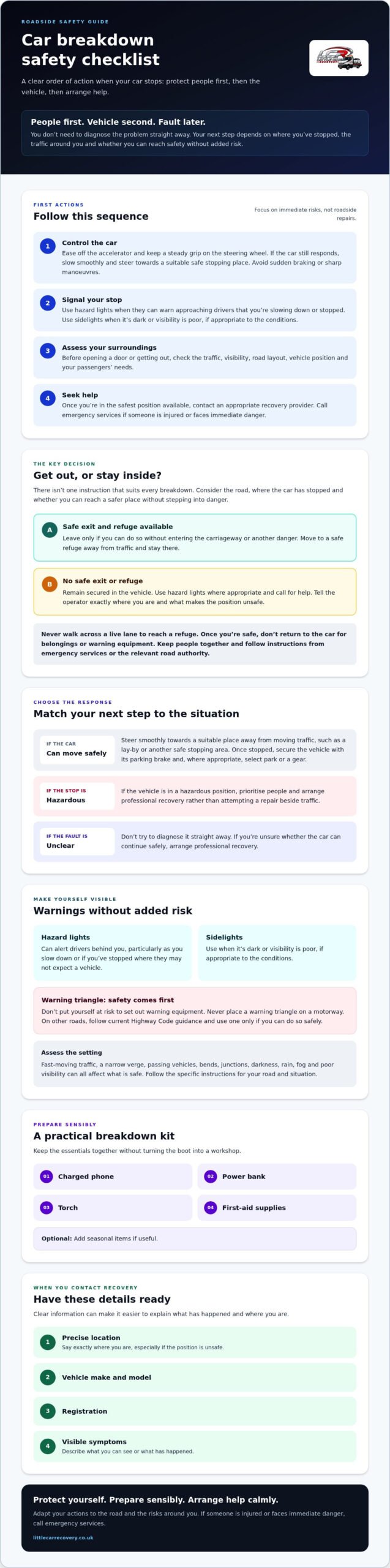
Use this short sequence to guide your first actions:
- 1. Control the car. If it still responds, slow smoothly and steer towards a safe stopping place. Avoid sudden braking or sharp manoeuvres.
- 2. Signal. Switch on your hazard lights when they can warn approaching drivers that you’re slowing down or stopped.
- 3. Assess your surroundings. Check the traffic, visibility, road layout and your passengers’ needs before opening a door or getting out.
- 4. Seek help. Once you’re in the safest position available, contact an appropriate recovery provider. Call emergency services if someone is injured or faces immediate danger.
What should you do as soon as your car breaks down?
Keep a steady grip on the steering wheel and ease off the accelerator. If the car remains controllable, aim for a suitable place away from moving traffic, such as a lay-by or another safe stopping area. Don’t make an abrupt manoeuvre to reach one. Once stopped, secure the vehicle with its parking brake and, where appropriate, select park or a gear. Check what’s around you before opening any door.
Which warning signals should you use?
Hazard lights can alert drivers behind you, particularly as you slow down or if you’ve stopped where they may not expect a vehicle. Use sidelights when it’s dark or visibility is poor, if appropriate to the conditions. Don’t put yourself at risk to set out warning equipment. Never place a warning triangle on a motorway. On other roads, follow current Highway Code guidance and only use one if you can do so safely.
Focus on the immediate risks, not on fixing the car at the roadside. If the vehicle is stopped in a hazardous position or you’re unsure whether it can continue safely, arrange professional recovery rather than attempting a repair beside traffic. This car breakdown safety checklist gives you a clear order of action while leaving room to adapt to the conditions around you.
Stay safe beside a broken-down car: assess the location first
There isn’t one instruction for getting out that suits every breakdown. A car stopped on a wide verge presents different risks from one beside a narrow road, close to fast-moving traffic or next to a barrier. Before opening a door, consider the vehicle’s position, the traffic flow and whether you and your passengers can reach a safer place without stepping into danger.
Move to a safe refuge away from traffic if you can reach it safely. Don’t walk across a live lane, even if you see a place that looks safer on the other side. Once you’ve reached a place of safety, don’t return to the car to collect belongings or warning equipment. Keep people together and follow instructions from emergency services or the relevant road authority.
Should you get out of the car or stay inside?
Check which side of the vehicle faces away from traffic and whether a barrier or other refuge is accessible. If you can exit without entering the carriageway or another danger, move to a safer place. If getting out would expose you to traffic, stay secured in the vehicle, switch on the hazard lights if appropriate and call emergency services if you’re in immediate danger. Follow official instructions for your location and situation rather than relying on a rule that may not fit.
Quick decision:
- A safe exit and refuge are available: Leave only if you can do so without moving into traffic, then stay well away from the road.
- No safe exit or refuge is available: Remain secured, make the vehicle visible with hazard lights where appropriate, and call for help. Tell the operator exactly where you are and what makes the position unsafe.
How should you adapt your actions to the road?
Motorways and other high-speed roads leave little margin for error. Traffic may approach quickly, and a narrow verge may not offer a safe place to stand. Follow the specific instructions for your road and consult our separate motorway breakdown guide for detailed motorway steps.
On ordinary roads, look out for passing vehicles, bends, junctions and limited space beside the carriageway. Darkness, rain, fog and poor visibility can make it harder for drivers to see you. A verge that seems clear in daylight may be slippery, narrow or uneven in poor weather. Don’t take a risky route to reach a better stopping place.
Ready.gov offers general emergency supply kit ideas for car preparedness, but UK road-safety decisions should follow current UK guidance. If the car can’t safely continue, consider professional vehicle recovery. Little Car Recovery’s vehicle recovery service is one option to explore.
Car breakdown checklist: decide what you can safely do
Once you’ve assessed your position, decide whether the car can safely move and whether you can identify the problem without putting anyone at risk. A restart or quick inspection won’t solve every breakdown, and trying either beside moving traffic can make a bad situation worse. Use this decision table as a guide, not as a substitute for current official instructions for the road you’re on.
| Situation | Safest next action | Who to contact |
|---|---|---|
| The car can move safely | If it responds normally and you can do so without creating another hazard, move it to a safer stopping place. Don’t continue the journey if warning signs or unusual behaviour make that unsafe. | Contact a recovery provider if the fault persists or you’re unsure the car is safe to drive. |
| The car is stopped in a hazardous place | Don’t attempt roadside repairs or put yourself in moving traffic. Follow the safest available option for your location and keep people away from danger. | Call emergency services if anyone is injured or in immediate danger. Contact recovery once the immediate risk is addressed. |
| The fault or risk is unclear | Don’t assume restarting, opening the bonnet or inspecting a tyre will make the car safe. Stay in a safer position and avoid handling the vehicle if conditions expose you to traffic or another hazard. | Ask a recovery provider for help assessing the vehicle and its transport needs. Use emergency services if there’s immediate danger. |
Roadside rules and procedures can vary by road type and location. Check current Highway Code and National Highways guidance for road-specific instructions, especially before using warning equipment or moving around the vehicle.
When is it safer to call for recovery than attempt a fix?
Arrange assistance if the car can’t move safely, the fault is unknown or the vehicle is exposed to traffic. A flat tyre, battery problem or lack of fuel may seem straightforward, but don’t try to change a tyre, jump-start the car or handle fuel beside moving traffic or in unsafe conditions. Tell the recovery provider what you’ve noticed so they can assess the help and transport required. Don’t assume every provider will carry out an on-site repair.
What if a passenger needs extra support?
Consider children, mobility needs, medical needs and pets before deciding where to wait. Keep passengers together in a secure place if it’s safe and practical. When you call for help, clearly explain any urgent welfare or access needs so responders understand the situation. A car emergency kit can support preparation, but it doesn’t make an unsafe roadside repair advisable. Use this car breakdown safety checklist to choose your next step based on the risk, not pressure to fix the fault yourself.
What to keep in your car: a practical breakdown kit checklist
A useful kit doesn’t need to fill the boot. Start with a few items that help you stay visible, warm and able to contact help. Keep them together where you can reach them safely, and tailor extras to your passengers and usual driving conditions. This practical car breakdown safety checklist separates everyday essentials from seasonal additions.
Which breakdown kit essentials are useful all year?
Build your core kit around items that support you while you wait, rather than tools that might tempt you to attempt an unsafe repair.
- Charged phone and power bank: Keep your phone charged before travelling and carry a charged power bank with a suitable cable.
- Torch: Choose one that’s easy to find and check its batteries or charge regularly.
- Basic first aid kit: Check that supplies remain usable and replace anything that’s expired or has been used.
- Water and warm layers: Pack drinking water and practical clothing for you and your regular passengers.
- Vehicle details: Keep relevant documents or key information accessible, but don’t leave valuable paperwork on display in an unattended car.
- High-visibility item: A vest or jacket may help you be seen, but only put it on or use it if doing so is safe and appropriate. Don’t step into traffic to retrieve it.
A warning triangle is not for use on a motorway. On other roads, check current Highway Code guidance before carrying or using one, and never put yourself at risk to position it.
What should you add for cold, dark or wet conditions?
Seasonal supplies can make a wait more manageable. Add a blanket, gloves, extra warm clothing and footwear suited to wet or uneven ground. In winter, check your torch and power bank before setting off, as you may need them during darker hours. Screen-cleaning supplies can help you prepare for poor visibility, but they’re not a reason to stop somewhere unsafe or leave the vehicle in a hazardous position.
- Cold weather: Keep an extra warm layer and a blanket within reach.
- Rain or snow: Pack weather-appropriate footwear and gloves.
- All conditions: Check torch batteries, power-bank charge, water and first-aid expiry dates periodically. Replace or replenish items after use.
A kit is a backup, not a substitute for vehicle maintenance or a safe plan if you break down. Keep your car breakdown safety checklist simple, and make sure everyone travelling knows where the essentials are. If your vehicle can’t safely continue, contact Little Car Recovery for roadside assistance.
Calling for breakdown help: what to tell the recovery provider
A clear description helps the recovery provider understand where you are, what’s happened and what assistance may be needed. Use this call checklist to keep the key details in front of you. If someone is injured or faces an immediate threat, contact emergency services first. A recovery request is not a substitute for urgent emergency help.
What details should you have ready when you call?
Share what you know, even if you’re unsure of the fault. Be precise about your location and explain any risks that could affect access or passenger safety.
- Location: Give the road name or number, direction of travel and nearby landmarks. If you’re in a lay-by, car park or other safe place, describe its entrance or position.
- Vehicle: State the make, model and registration. Mention visible damage or warning lights if you can see them safely.
- What happened: Describe the symptoms, such as a flat tyre, loss of power or a car that won’t start. Say whether it can move under its own power, but don’t test it if doing so could create danger.
- Safety and access: Explain whether the car blocks traffic, sits in a hazardous position or is difficult to reach. Mention passengers, children, pets or urgent mobility or medical needs.
If you’re unsure of the exact location, say so. Give clear landmarks and any direction signs you can read from a safe position. Don’t walk towards traffic or leave a place of safety to gather more information.
What happens after you request recovery?
The provider may ask follow-up questions about the vehicle’s condition, access and whether it can be moved safely. Your answers help them understand the recovery or transport needed. Keep your phone available, remain in a safe place and follow any instructions from emergency services or road authorities while you wait. If your position or anyone’s welfare changes, update the relevant service.
A prepared car breakdown safety checklist can make a stressful call easier. Keep your location, registration and a brief description of the symptoms ready to share. For help arranging roadside assistance, contact Little Car Recovery for 24/7 roadside assistance. Tell the team what’s happened and where you’re waiting so they can understand your situation.
Be ready to take the next safe step
A breakdown is easier to manage when you have a clear order of action. Put people’s safety first, assess whether you can reach a safer place without added risk, and don’t attempt a repair beside moving traffic. A practical car breakdown safety checklist also means keeping a few useful essentials in the car and knowing which details to share when you call for help.
If your vehicle can’t safely continue, professional recovery can help you arrange the next step. Little Car Recovery has over ten years of vehicle recovery experience and provides 24/7 roadside assistance across the UK. You can make contact by phone or WhatsApp.
Contact Little Car Recovery for 24/7 roadside assistance and explain your location, vehicle and situation. With a little preparation and calm, clear information, you can make a safer plan and get through an unexpected stop with greater confidence.
Frequently Asked Questions
What should I do first if my car breaks down?
Stay calm, slow down smoothly and aim for a safe place away from traffic if the car still responds. Switch on your hazard lights when appropriate, secure the vehicle and check your surroundings before opening a door. If your stopping place puts anyone in immediate danger, focus on personal safety and contact emergency services. Don’t try to diagnose or repair the car beside moving traffic. Safety comes before finding the fault.
Should I get out of my car if it breaks down?
Decide based on the road, your vehicle’s position and whether you can reach a safe place without crossing traffic. If you have a safe exit and refuge, follow current official guidance for that road. If leaving would expose you or your passengers to danger, stay secured, use hazard lights if appropriate and call for help. Never walk across live traffic or return to the vehicle from an unsafe roadside position.
What should I keep in a car breakdown kit?
Pack a charged phone, charging cable or power bank, torch, basic first-aid kit and clothing suited to the weather. Water and a blanket can make a delay more manageable, particularly in cold conditions. Keep the kit accessible and check supplies, batteries and expiry dates regularly. A kit supports preparation, but it doesn’t make a roadside repair safe. Don’t retrieve items or equipment if doing so would put you near moving traffic.
Should I use a warning triangle after a car breakdown?
Never place a warning triangle on a motorway. On other roads, consider the location and check current official guidance before using one. Don’t walk into or alongside moving traffic to position it, and leave it in the car if reaching the roadside would put you at risk. Focus on reaching a safe place and contacting assistance. Hazard lights may help alert approaching drivers when appropriate, but they don’t remove the need to assess your surroundings.
What should I do if my car breaks down and there is nowhere safe to stop?
Move as far from moving traffic as the vehicle safely allows, switch on hazard lights and avoid stepping into a live lane. If getting out would expose you to danger, stay secured and contact emergency services. Give them your location and explain what makes the stopping place hazardous, then follow their instructions. Road conditions differ, so check current official guidance for advice that applies to your particular road and situation.
What information should I give when calling for breakdown recovery?
Give your precise location, road name or number, direction of travel and nearby landmarks. Share the vehicle’s make, model and registration, then briefly describe the fault, warning signs or visible damage. Explain whether the car can move, whether it blocks traffic and whether anyone needs urgent help. Mention access restrictions, such as a narrow approach or barrier. These details help the recovery provider understand the situation and plan suitable assistance.
Pingback: Emergency Vehicle Recovery: What to Do in 2026 – littlecarrecovery.co.uk